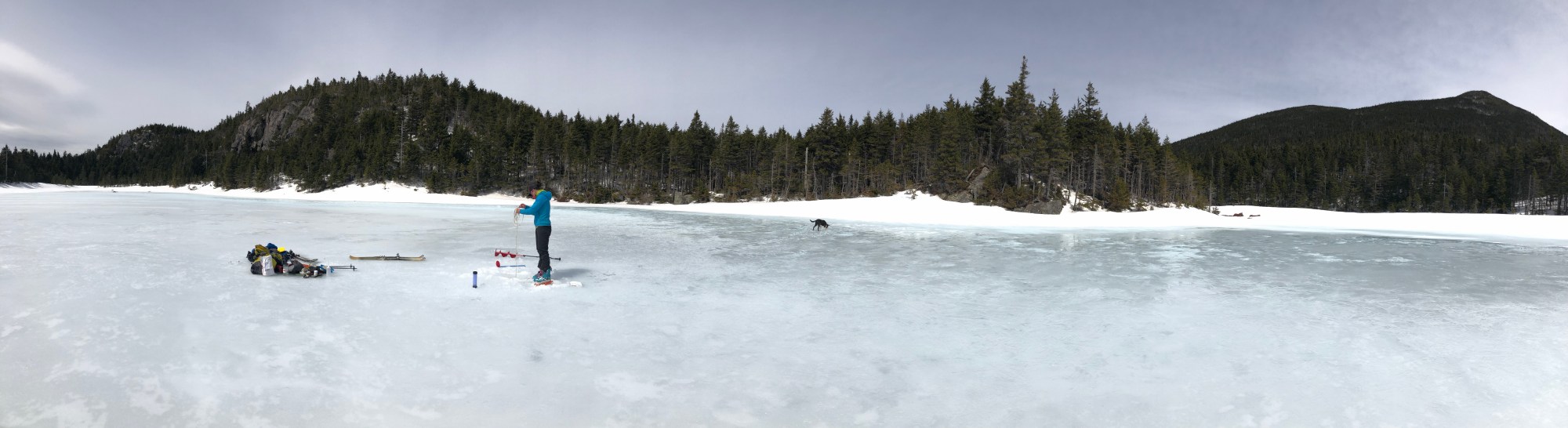
Broadly, I am interested in how diversity in species traits or habitats shape climate change response in aquatic ecosystems. My work spans multiple systems and organisms, but throughout is motivated by enhancing decision-making around management or conservation.
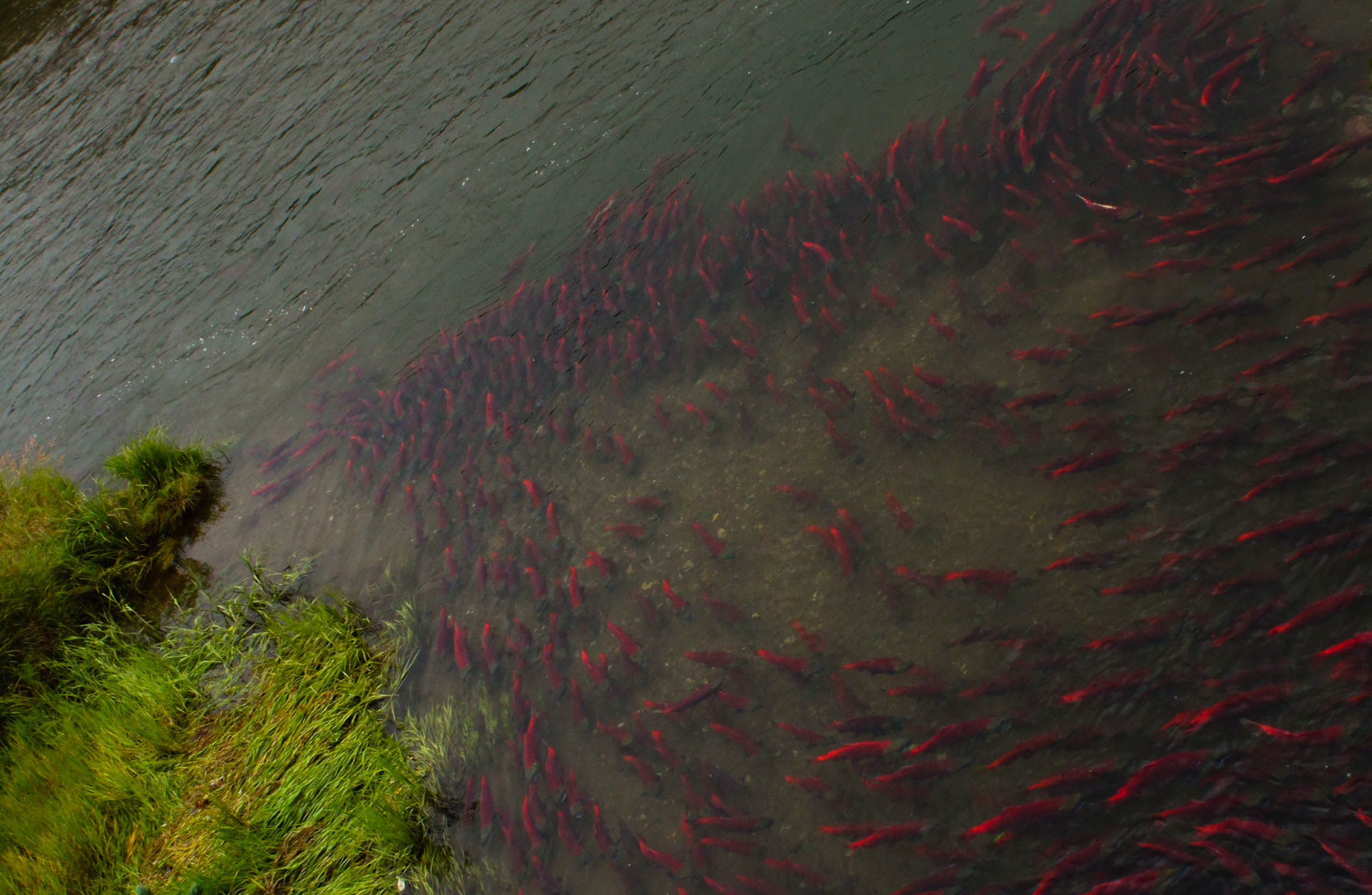
Life history trait diversity in changing environments
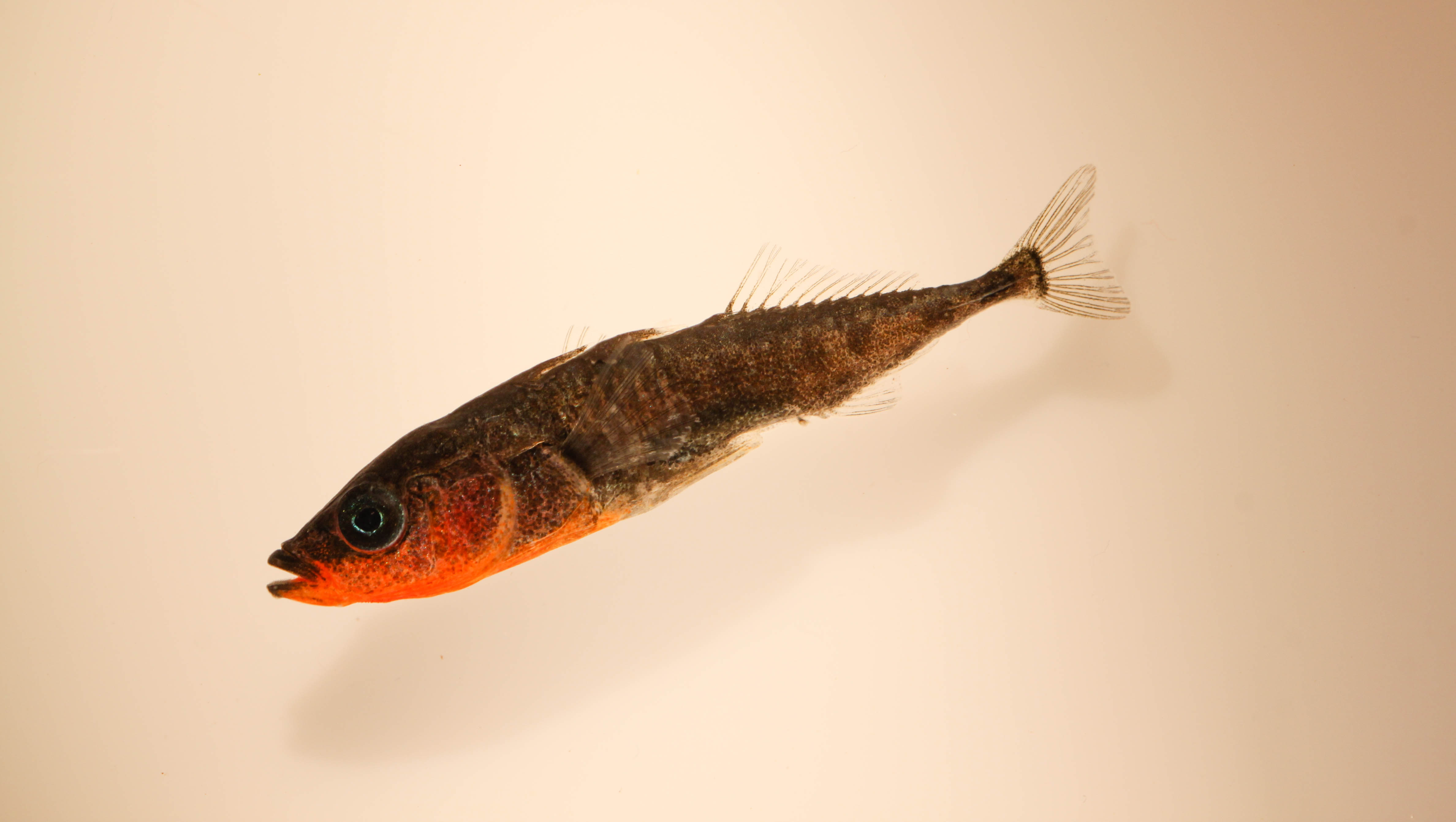
Across and within species, diverse life history traits centrally shape how organisms respond to changing environments. My work on trait diversity has included how variable or changing environments interact with juvenile salmon migration phenology, breeding phenology in threespine sticklebacks, and fish physiology (thermal tolerances and body stoichiometry).
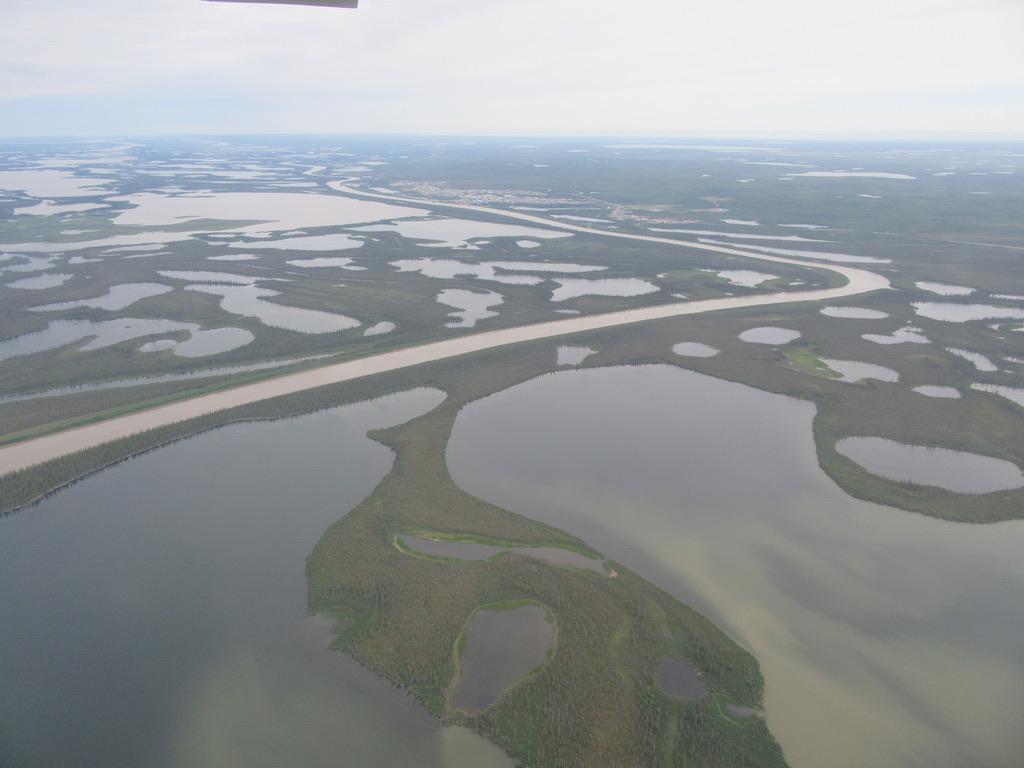
Currently, I pursue these questions with focus on a culturally-important subsistence fish species. Since summer 2017, I have worked alongside multiple collaborators at the Gwich’in Renewable Resource Board, in Arctic communities, and at other universities and agencies (University of Victoria, Memorial University, Department of Fisheries and Oceans, Environment and Climate Change Canada) on a community-based project on on Łuk digaii (Broad Whitefish, Coregonus nasus) in the lower Mackenzie River. Active research questions include describing fish migratory diversity and habitat use, the role of life history diversity in contaminant exposure, and population response to a rapidly-changing watershed. For more information and recent publications, visit the whitefish project website here.
Habitat diversity, landscape gradients, and ecosystem response to change
Impacts of regional climate change on aquatic systems are multifaceted, and ecosystem processes and organism responses are shaped by the ways in which climate is filtered through diverse habitats and landscape gradients. Past work on these themes has examined the role of fine-scale habitat heterogeneity in mediating how fish communities respond to climate warming, and links between lake metabolism and carbon source across lake types.


Ongoing projects focus on the role of elevational gradients in shaping lake phenology and ecosystem response to regional change. In collaboration with others at University of Maine-Orono, University of Maine-Farmington, the Appalachian Mountain Club, and University of New Hampshire, my work on small, high-elevation lakes in the northern Appalachian Mountains uses landscape features and water chemistry to understand drivers of change and ecosystem response. Recent questions include how high-elevation watersheds preserve cold-water refugia, sensitivities of zooplankton assemblages to spring ice breakup phenology, and using high-resolution sensors to examine connections between lake productivity and conditions such as lake turnover (mixing), ice phenology, and different kinds of precipitation events. We have also initiated snowpack monitoring in these remote, mountainous locations to fill gaps in existing snow records and better understand how snowpack shapes headwater lakes and their watersheds. Find papers and more on this work here.

Select media coverage
McGuire, Peter. 2026. “Climate researchers dig into Maine’s mountain snowpack”. Maine Public Broadcasting Network. https://www.mainepublic.org/climate/2026-03-30/climate-researchers-dig-into-maines-mountain-snowpack
Richard, Rebecca. 2026. “Why some snow squeaks and some packs like cement”. Portland Press Herald. https://www.pressherald.com/2026/03/03/why-some-snow-squeaks-and-some-snow-packs-like-cement/
Cromwell, Sydney. 2026. “For Maine’s Lakes, Shorter Ice Seasons Mean Loss of Water Quality, Winter Traditions”. Inside Climate News. https://insideclimatenews.org/news/14022026/maine-shorter-ice-season-water-quality/
Zimmer, Katarina. 2025. Marking time in a changing world. Nautilus Magazine. https://nautil.us/marking-time-in-a-changing-world-1226557/
Pratt-Keiley, Esta. 2022. “Mountain lakes in western Maine may provide a unique refuge for species as the climate warms”. Maine Public Radio. https://www.mainepublic.org/environment-and-outdoors/2022-02-22/mountain-lakes-in-western-maine-may-provide-a-unique-refuge-for-species-as-the-climate-warms
Bowling, Eric. 2021. “Gwich’in traditional knowledge adapts to climate change”. Inuvik Drum/News North. https://www.nnsl.com/news/gwichin-traditional-knowledge-adapts-to-climate-change/
Canadian Science Publishing. 2020. “Ongoing monitoring by Indigenous communities enhances wildlife research”. Medium. https://medium.com/arctic-science/ongoing-monitoring-by-indigenous-communities-enhances-wildlife-research
Mulherin, A. 2020. “UMF graduate goes from volunteer to career, in the face of the pandemic”. UMF Media relations https://www.umf.maine.edu/2020/07/umf-graduate-goes-from-volunteer-to-career-in-the-face-of-the-pandemic/
Mastrangelo, R. 2019. “Into the Wild”. Farmington First Magazine. https://www.umf.maine.edu/alumni/into-the-wild/
Ogden, L.E. 2019. “How salmon can transform a landscape”. BBC Futures. https://www.bbc.com/future/article/20191128-the-rivers-that-are-losing-their-salmon
Lant, K. 2019. “Monitoring Wilson Lake all year long from underwater”. Environmental Monitor. https://www.fondriest.com/news/monitoring-wilson-lake-all-year-long-from-underwater.htm
Friends of Wilson Lake. 2019. “Wilson Lake buoy: eyes underwater”. Sun Journal. https://www.sunjournal.com/2019/04/26/wilson-lake-buoy-eyes-underwater/
Edwards, T. 2019. “Watching the whitefish”. News North. https://nnsl.com/nwtnewsnorth/watching-the-whitefish/
Scott, M. 2018. “Fort McPherson couple forgoes retirement, participates in whitefish research”. Canadian Broadcast Company. https://www.cbc.ca/news/canada/north/mackenzie-delta-fish-camp-1.4758941
Segerstrom, C. 2018. “Tossing salmon for science”. High Country News. https://www.hcn.org/issues/50.20/scientific-research-tossing-salmon-for-science
Legere, J. 2017. “How a chance meeting led to community-based fish research in the Peel”. Canadian Broadcast Company. https://www.cbc.ca/news/canada/north/whitefish-peel-river-fort-mcpherson-researchers-1.4269158
Ma, M. 2017. “Climate change prompts Alaska fish to change breeding behavior”. UW News. https://www.washington.edu/news/2017/01/18/climate-change-prompts-alaska-fish-to-change-breeding-behavior/
Rosen, Y. 2017. “As water temperatures rise, some fish are breeding earlier—and more often”. Anchorage Daily News. https://www.adn.com/alaska-news/science/2017/01/29/as-water-temperatures-warm-some-fish-are-breeding-earlier-and-more-often/
 rachelhovel.com